BirdLense
live·YOLO + ByteTrack · BirdNET · Raspberry Pi · Docker
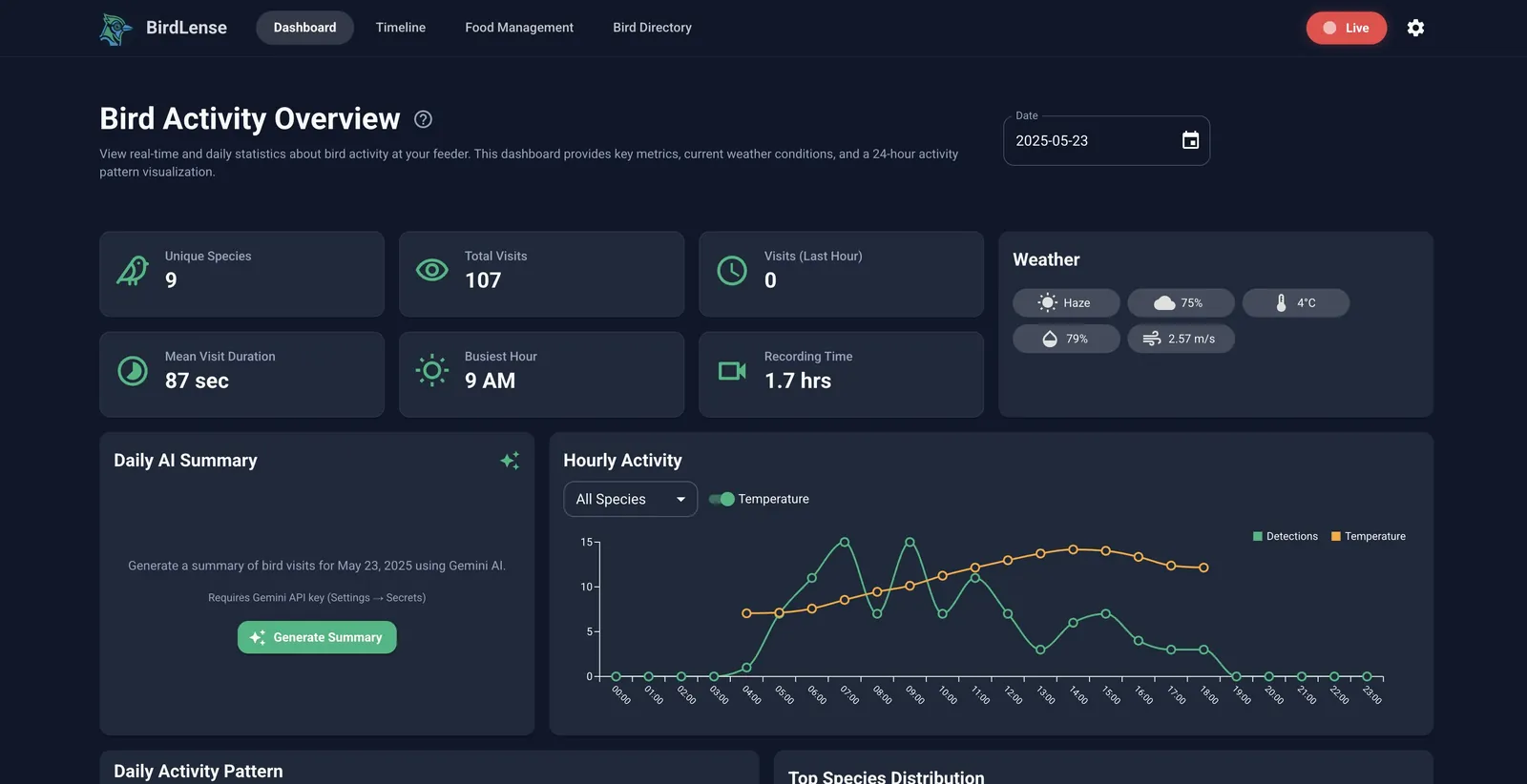
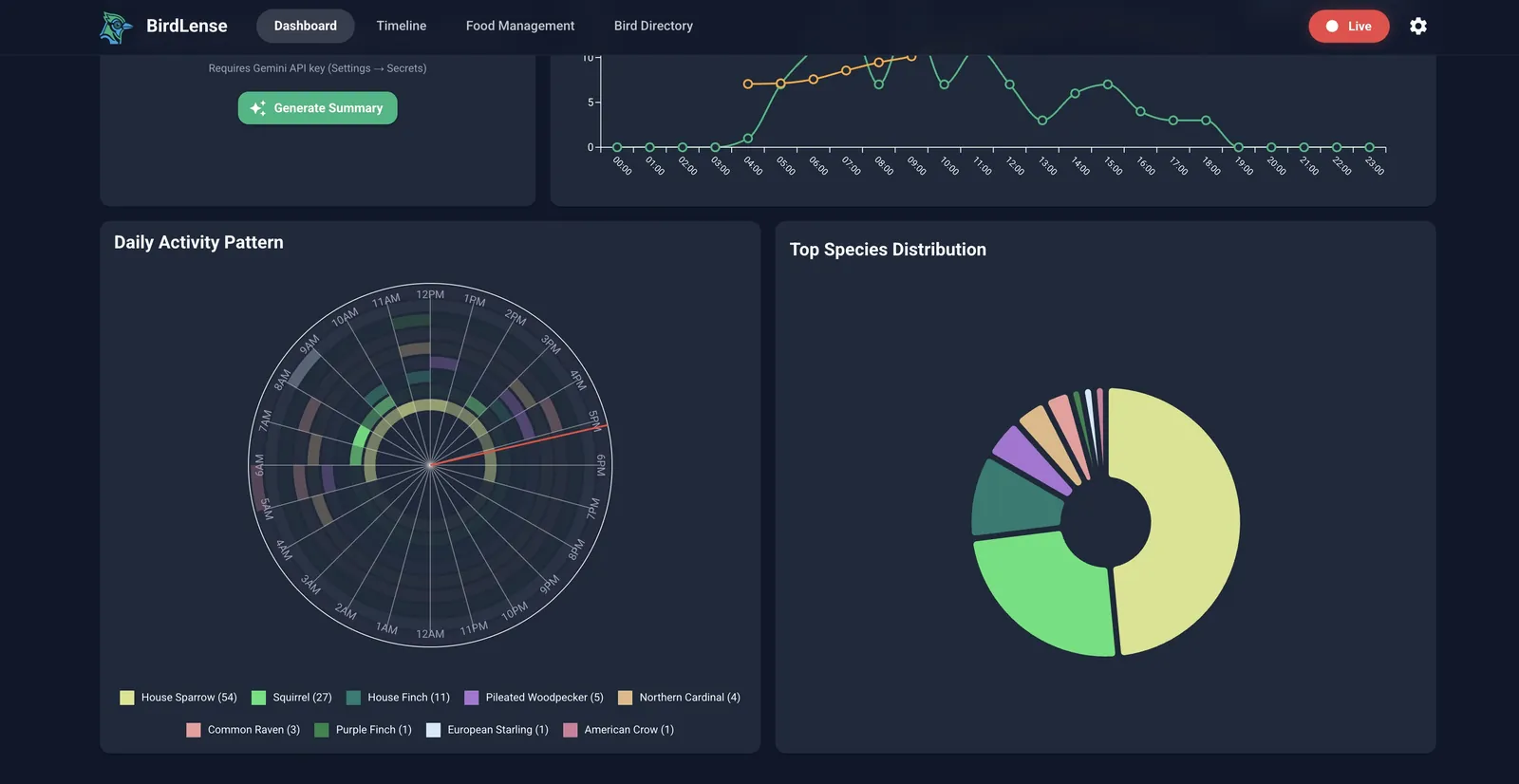
A Raspberry Pi in the yard records what visits the bird feeder, works out what it was from the video and the audio, and writes it down. Everything shown below is one day at one feeder — the numbers are its own.
Two stages, not one big model
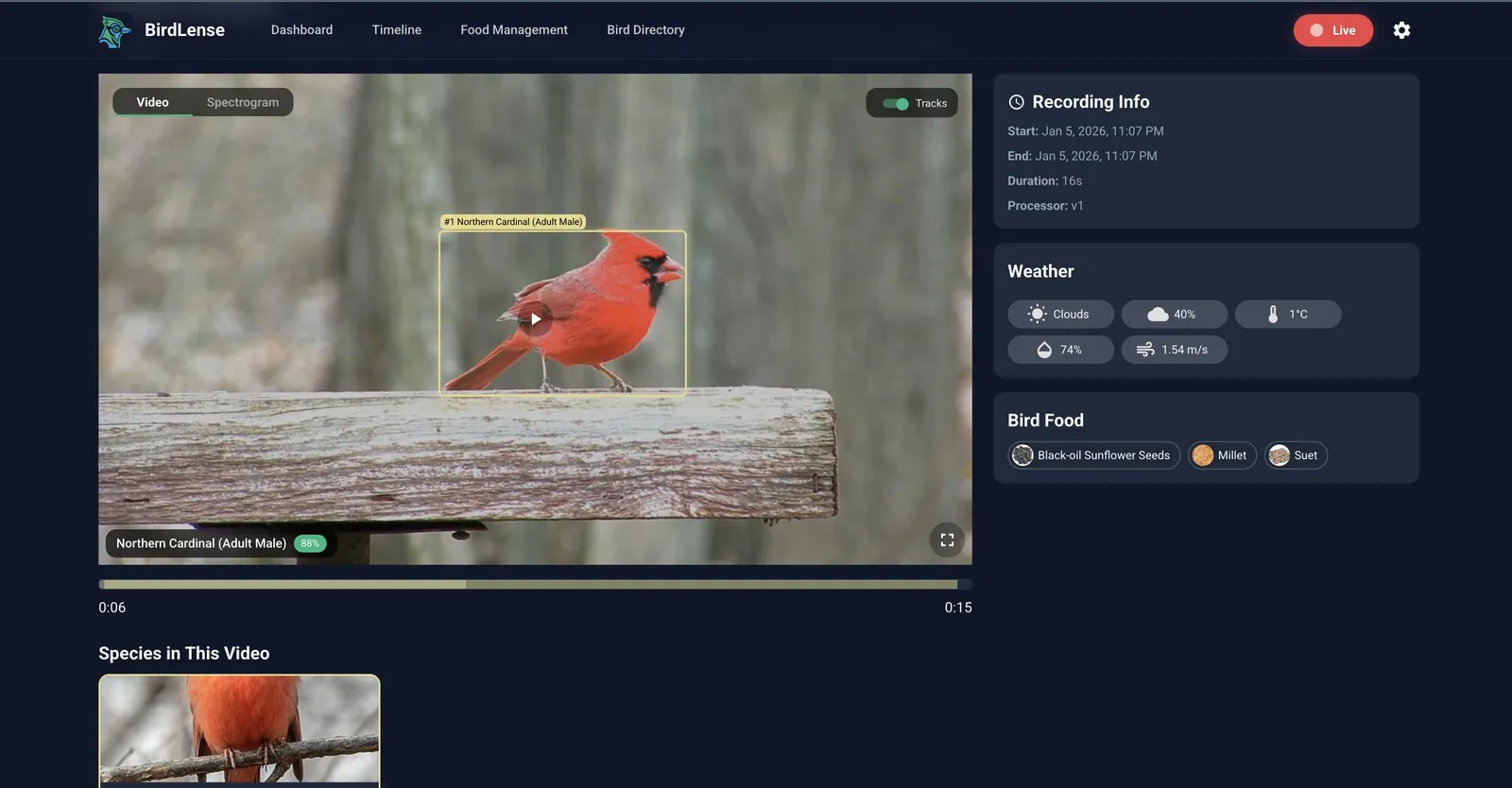
A binary detector decides whether there is a bird at all, and only then does a species classifier run. On a Pi that is the difference between keeping up with the camera and not. ByteTrack sits on top so one visit is one bird, not forty frames of separate sightings.
It listens as well as looks
BirdNET-Analyzer runs on the USB mic, so a bird calling from the tree behind the feeder is still recorded. Vision and audio are two independent votes on what was there, which is the point of having both.
Nothing leaves the yard
Detection, classification, storage and the web UI all run on the device, in Docker. The cloud is opt-in and used for exactly two things: the weather, and an optional Gemini call that writes the day up in a paragraph.
- device
- raspberry pi
- vision
- yolo + bytetrack
- audio
- birdnet-analyzer
- data
- stays on the pi